Persistent fatigue, brain fog, and low-grade inflammation that linger long after an infection has cleared are more common than most people realize. For a meaningful share of people who have had COVID-19, symptoms can continue for months — a condition now widely referred to as long COVID. With no approved pharmaceutical treatment for the condition, researchers have turned to nutrients already known for their anti-inflammatory and immune-regulating properties, and one combination in particular has produced encouraging clinical results: vitamins D3 and K2.
What a 2025 Randomized Controlled Trial Found
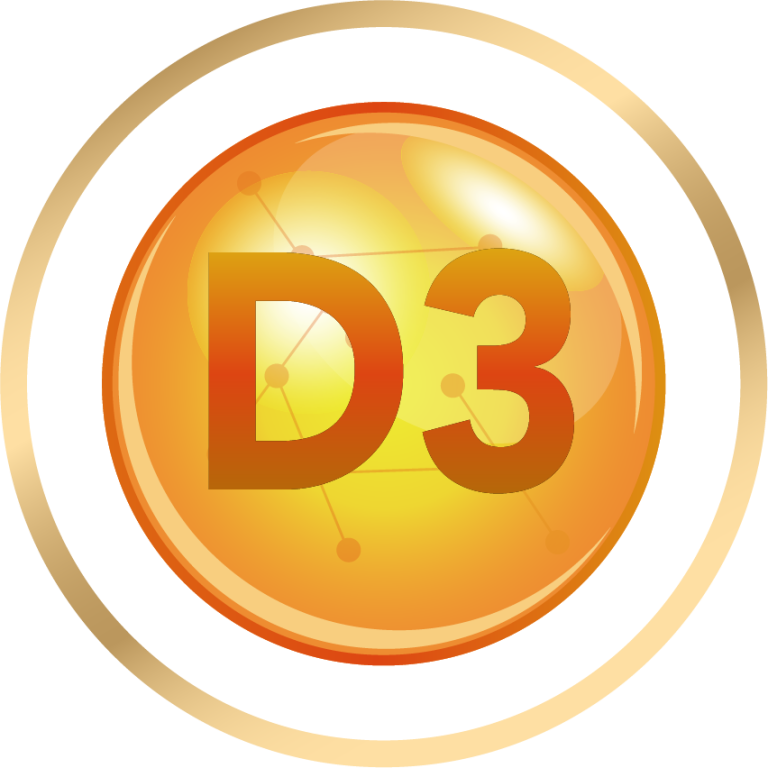
A single-site randomized controlled trial published in the journal Nutrients enrolled 151 adults with long COVID and randomized them 2:1 to receive either a daily co-formulated dose of 2000 IU vitamin D3 and 240 µg vitamin K2 (MK-7 form), or standard care, for 24 weeks. The results, published in early 2025, were notable for a condition with few evidence-backed interventions.
Fewer Symptoms, Lower Inflammation
Participants receiving vitamin K2/D3 saw a 7.1% decrease in the proportion scoring above the clinical threshold on the RECOVER Long COVID Research Index, while the standard-care group saw symptoms move in the opposite direction over the same period. The number of reported long-COVID symptoms remained stable in the supplemented group but increased in the control group. The most consistent improvements were in fatigue, body pain, post-exertional malaise, and shortness of breath.
Gut Integrity and Fungal Translocation
One of the more distinctive findings involved gut health. Long COVID has been associated with increased intestinal permeability and fungal translocation — essentially, a “leakier” gut barrier that allows more inflammatory triggers into the bloodstream. Over the 24-week trial, the vitamin K2/D3 group showed measurable reductions in (1,3)-β-D-glucan, a marker of fungal translocation, alongside reductions in oxidized LDL and inflammatory markers sTNF-RI and sCD163 compared with standard care.
Why Vitamin D3 and K2 Work Better Together
Vitamin D plays a central role in regulating immune cells — dendritic cells, monocytes, macrophages, and T and B cells — shifting the balance away from pro-inflammatory pathways and toward a more regulated immune response. Vitamin K, meanwhile, helps activate proteins involved in directing calcium to where the body needs it (bone and cardiovascular tissue) and away from soft-tissue inflammation, while independently helping to reduce interleukin-6, a key inflammatory cytokine. Supplementing the two together, rather than D3 alone, appears to compound these anti-inflammatory effects rather than simply adding to them.
Where This Pairing Shows Up in a Nooria Routine
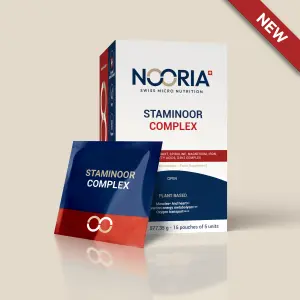
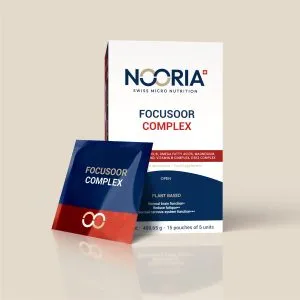
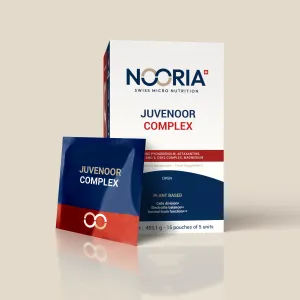
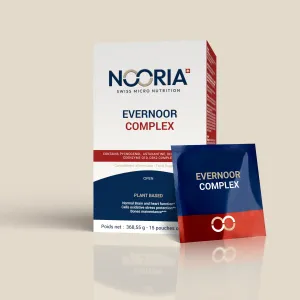
A D3K2 blend is one of the shared building blocks across several Nooria formulas, reflecting how foundational this nutrient pair is to immune and inflammatory balance. It is included in Staminoor Complex alongside vitamin C, B6, and B12 to support steady energy and immune resilience, and also appears in Focusoor Complex, Juvenoor Complex, and Evernoor Complex, each pairing it with complementary actives for bone, cardiovascular, and cellular support.
As with any vitamin K-containing supplement, anyone taking anticoagulant medication should consult their doctor before starting a D3K2 formula.
The Bottom Line
This trial doesn’t position vitamin D3/K2 as a cure for long COVID, and its authors are clear that larger, longer studies are needed. But for a condition with essentially no approved treatment, a well-tolerated, low-cost nutrient pair that measurably reduced symptom burden and inflammatory markers over six months is a meaningful finding — and a reminder that foundational nutrients often do more than their reputation suggests.
References
[1] Atieh, O.; Daher, J.; Durieux, J.C.; et al. “Vitamins K2 and D3 Improve Long COVID, Fungal Translocation, and Inflammation: Randomized Controlled Trial.” Nutrients 2025, 17, 304. https://doi.org/10.3390/nu17020304 (open access, CC BY 4.0)
This content is for informational purposes only and is not intended as medical advice. Always consult a qualified healthcare professional before starting any new supplement, diet, or exercise program. These statements have not been evaluated by regulatory health authorities. Nooria products are not intended to diagnose, treat, cure, or prevent any disease.