Which One Actually Makes Sense
Reviewed by the Nooria Scientific Advisory Board
The question is usually framed as which is better. That framing has no answer, because the two are built for different jobs. A multivitamin is designed for a population. A personalised programme is designed for a person. Whether the second is worth the difference depends on what you need it to do.
Here is what each one can and cannot do, and how to decide.
What a multivitamin is for
A multivitamin is cover against gaps. It delivers a broad set of nutrients at modest amounts, calculated to be safe for almost anyone.
That design has genuine value and clear limits. In 2022 the US Preventive Services Task Force concluded that the evidence is insufficient to assess the balance of benefits and harms of multivitamin supplementation for preventing cardiovascular disease or cancer — a Grade I statement. The same review recommended against beta-carotene and vitamin E for that purpose, a Grade D.
Where multivitamins have shown something firmer is cognition. Pooling three studies within the COSMOS trial across more than 5,000 participants, a daily multivitamin produced a statistically significant benefit for global cognition and episodic memory, which the authors estimated as slowing global cognitive ageing by roughly two years relative to placebo.
So a multivitamin is a defensible baseline. What it cannot be is specific.
Why the combination is the whole point
Supplements work better when the combination reflects two things at once: the state your body is actually in, and what you are trying to achieve. A fixed formula sees neither.
Take the most common complaint in the category — persistent tiredness. Tiredness is not one condition. In one person it traces back to poor iron status. In another to low vitamin D through a winter with little daylight. In a third it is B-vitamin status, or sleep quality, or training load outrunning recovery. These are different mechanisms, and they need different nutrients at different amounts.
A multivitamin marketed “for energy” cannot resolve that, because it was assembled before anyone knew who would take it. It puts a little of everything in one tablet, which means it reaches the mechanism that actually applies to you by coincidence, and usually at an amount chosen to be harmless rather than effective. If your tiredness is driven by one specific thing, a broad low-dose blend is the wrong instrument. And if it is driven by something supplements cannot fix, the blend will not tell you that either.
Personalisation is the attempt to close that gap: to start from your situation and your objective, and to build the combination from there. The published evidence supports the approach where it has been tested — a 2025 systematic review in Food & Function covering 24 randomised controlled trials found that personalised nutrition consistently improved dietary quality and produced significant improvements in metabolic markers, including HbA1c, triglycerides and insulin sensitivity.
There is a second, less obvious problem with the fixed set. Because a multivitamin assumes it might be the only thing you take, it is built with a safety margin — but that margin only holds while it is the only thing you take. The moment you add anything alongside it, you are combining two products that were each designed without knowledge of the other, and the totals stop being anyone’s responsibility.
What a personalised programme has to actually deliver
Three things. A service that does not do all three is a multivitamin with a questionnaire attached.
The right combination. Built from your current state and your stated objective, not from the name of a symptom.
The right amounts. A nutrient present in a token amount is decoration, not formulation. Amounts should sit where the research actually placed them.
No duplication inside the programme itself. This is the criterion nobody advertises against, because it argues for giving you less. Roughly 15% of adults already take four or more supplements a day. The more items a service hands you to take at once, the higher the chance that the same nutrient arrives from three of them, and that nobody has added up the total. A serious programme calculates the daily total across everything it gives you — not product by product.
Personalisation needs a ceiling
Once you move away from a one-size formula, an upper limit stops being optional. Tailoring amounts upward without a defined ceiling is not precision; it is just a bigger dose.
Switzerland is unusual in having this written into law. Since 1 July 2020 it has operated a formal maximum-amount model for vitamins and minerals, calculated from tolerable upper intake levels minus what people already get from food. The European Union, despite its own Food Supplements Directive requiring EU-wide maximum amounts to be set, has never enacted them — they remain national, and several member states have none.
A programme worth its price should be working inside a ceiling like that, and should have someone qualified deciding where within it you land.
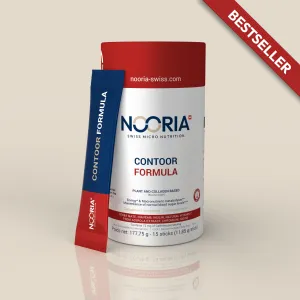
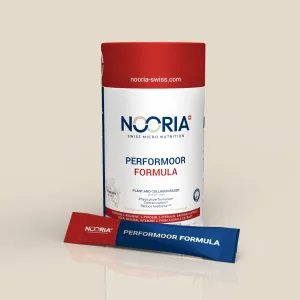
What this looks like in practice: the Nooria 8 week personalised program
Our eight-week personalised programme is built around exactly these constraints, so it is worth describing concretely rather than in principle.
It begins with a 25-question evaluation that takes about ten minutes and covers biology, lifestyle and goals. Within 24 hours the Nooria Scientific Advisory Board composes the roadmap — a person reviews it, not only an algorithm. Signature Shots are then prepared individually in our Swiss Atelier, which is why the physical products take up to ten business days.
The programme runs in three phases. Preparation (weeks 1–2) is a single product supporting elimination and digestion. Foundation (weeks 3–4) introduces two products selected by our Swiss specialists. Transformation (weeks 5–8) continues those alongside your personalised Signature Shots. Six products across the eight weeks in total — and never more than two in any single day, which is how the duplication problem above is prevented rather than merely discussed.
It also ends. After eight weeks you have a clear sense of what has shifted, and you can set a new objective, pause, or stop. That is a different structure from an open-ended subscription, and a deliberate one. Pricing starts from 15 CHF per day, varying with the protocol.
The full list of actives used across our formulas is published in our Ingredient Library.
How to choose
Take a multivitamin if you want broad, low-risk cover, you take little else alongside it, and you are not trying to solve anything in particular. It is a reasonable floor and it is inexpensive.
Choose a personalised programme if you have a specific objective rather than a general wish to feel better, if the same complaint has persisted through a multivitamin already, or if you want the combination and the amounts decided by someone who knows your situation instead of by an average.
And whichever you choose, ask the same three questions: what is in it, in what amount, and who decided.
Sources
- US Preventive Services Task Force. Vitamin, Mineral, and Multivitamin Supplementation to Prevent Cardiovascular Disease and Cancer: Recommendation Statement. 21 June 2022. Grade I for multivitamins; Grade D for beta-carotene and vitamin E.
- Baker LD, Manson JE, Sesso HD, et al. Effect of multivitamin-mineral supplementation versus placebo on cognitive function: COSMOS clinic subcohort and meta-analysis of three cognitive studies within COSMOS. American Journal of Clinical Nutrition, 2024. doi:10.1016/j.ajcnut.2023.12.011
- Martinsen T, Brennan L. Key evidence for personalised nutrition: a review of randomised controlled trials. Food & Function, 2025. 24 RCTs, 2000–2025.
- CDC / National Center for Health Statistics, Data Brief 561: Dietary Supplement Use, United States, August 2021–August 2023.
- EDI Ordinance on Food Supplements (VNem, SR 817.022.14), Switzerland; FSVO maximum-amount model in force since 1 July 2020.
- Directive 2002/46/EC on food supplements, Article 5; European Commission statement that no proposal on EU-wide maximum amounts has been presented.
This content is for informational purposes only and is not intended as medical advice. Always consult a qualified healthcare professional before starting any new supplement, diet, or exercise program. These statements have not been evaluated by regulatory health authorities. Nooria products are not intended to diagnose, treat, cure, or prevent any disease.