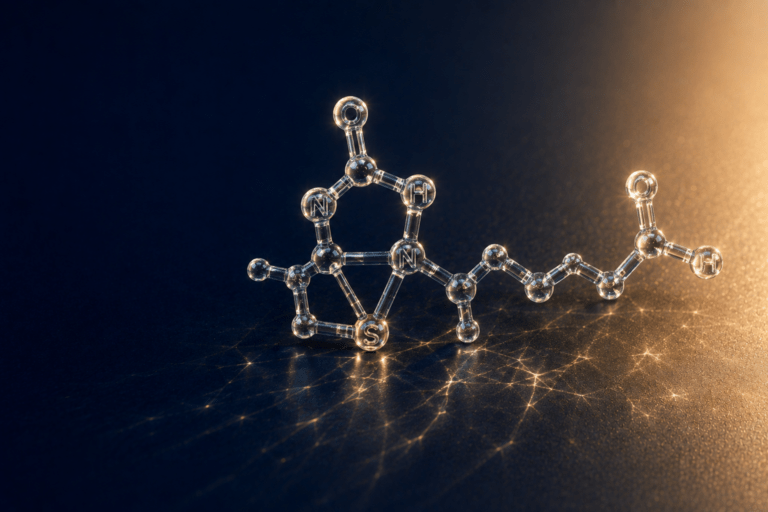
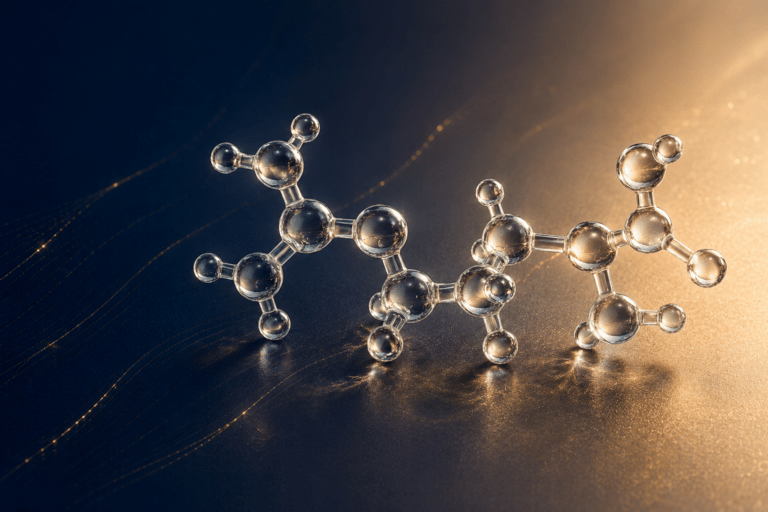
L-theanine is a non-protein amino acid found almost exclusively in tea leaves — gyokuro and matcha contain the most, sencha less — and it’s one of the few natural compounds studied for a genuinely dual effect: calming without sedating, and supporting attention without the jitteriness of a stimulant. Two separate lines of clinical research back the two halves of that reputation: a randomized trial on cognitive function, and a systematic review on sleep quality.
The Cognitive Trial: Attention and Working Memory
A 2021 randomized, double-blind, placebo-controlled study published in the Journal of Medicinal Food gave 50 Japanese adults aged 50–69 either 100.6 mg of L-theanine or a placebo daily for 12 weeks, testing cognitive function before and after a single dose, and again after the full 12 weeks, using a validated computerized test battery (Cognitrax).
What a Single Dose Did
After just one dose, the L-theanine group showed significantly faster reaction times on an attention task (the Stroop test) and, on a working-memory task, more correct answers with fewer omission errors than the placebo group — evidence that a single dose was enough to measurably sharpen attention and working memory.
What 12 Weeks of Regular Intake Did
Interestingly, the attentional benefit seen after a single dose did not persist as a distinct effect after 12 weeks of regular ingestion — the researchers note this may reflect an interaction with other compounds in the study design rather than theanine losing effect, and flag it as a question for future research. The working-memory improvement from the single-dose study is consistent with earlier research showing theanine increases alpha-wave brain activity linked to relaxed, focused attention.
The Sleep Evidence: A Systematic Review
A 2023 systematic review (presented at the European Nutrition Conference and published in Proceedings) pooled 11 studies on L-theanine and sleep quality, covering 373 adults and 107 children across treatment durations from one day to eight weeks. The review found improvements across multiple sleep parameters — sleep onset latency, total sleep time, sleep duration, sleep efficiency, overall sleep quality, reduced daytime dysfunction, fewer early awakenings, less reliance on sleep medication, and fewer sleep disturbances overall (all statistically significant).
The Dose Range Matters
The review’s key practical finding: L-theanine appeared effective for sleep at doses between 50 and 655 mg, whether taken alone or combined with other bioactives — but doses above 655 mg were not shown to be more beneficial, and may not improve sleep quality further. More isn’t automatically better here.
How the Two Effects Fit Together
L-theanine’s calm-but-alert profile is thought to come from its structural similarity to glutamate, letting it modulate excitatory neurotransmission without the sedation of a classic calming agent — which is consistent with a compound that can sharpen attention during the day and support sleep onset at night, depending on when and how it’s used, rather than being simply “a stimulant” or “a sedative.”
The Bottom Line
The clinical evidence for L-theanine is genuinely two-sided and both sides hold up: a randomized trial shows measurable, same-day improvements in attention and working memory, and a systematic review of 11 studies shows consistent sleep-quality benefits at moderate doses. The open questions are about long-term daily use (the cognitive trial’s 12-week attentional effect was less clear-cut than the single-dose result) and the exact optimal dose for sleep — both flagged by the researchers themselves as needing further study.
References
[1] Baba, Y.; Inagaki, S.; Nakagawa, S.; Kaneko, T.; Kobayashi, M.; Takihara, T. “Effects of L-Theanine on Cognitive Function in Middle-Aged and Older Subjects: A Randomized Placebo-Controlled Study.” J. Med. Food 2021, 24(4), 333–341. https://doi.org/10.1089/jmf.2020.4803
[2] Bulman, A.; D’Cunha, N.; Marx, W.; Turner, M.; McKune, A.; Naumovski, N. “The Effects of L-Theanine Supplementation on Quality of Sleep: A Systematic Review.” Proceedings 2023, 91, 32. https://doi.org/10.3390/proceedings2023091032 (open access)