Skin aging, dry eyes, and vaginal dryness rarely get discussed as related problems, but they share a common root: as estrogen and collagen production decline with age — especially around and after menopause — the tissue that depends on them loses moisture, elasticity, and barrier function almost everywhere at once. A 2024 randomized controlled trial in the Journal of Functional Foods tested whether a single oral supplement, sea buckthorn oil, could address all three simultaneously.
What Makes Sea Buckthorn Oil Nutritionally Unusual
Sea buckthorn is the only known plant source containing a wide spectrum of fatty acids across Omega 3, 6, 7, and 9 — including Omega 7 (palmitoleic acid), which is rare in the plant kingdom and makes up nearly a third of the oil’s fatty acid profile. It’s also rich in carotenoids, tocopherols, and tocotrienols, giving it meaningful antioxidant density on top of its fatty-acid content.
What the 12-Week Trial Found
Forty healthy women over 45 (mean age 52.5) were randomized to take a 500 mg daily sea buckthorn oil softgel or a placebo for 12 weeks, with skin, blood, eye, and vaginal-health measures tracked throughout.
Skin: Measurable, Not Just Reported
Using standardized instruments (not self-report), the sea buckthorn group showed statistically significant improvements by week 12: skin brightness up 2.2%, moisture up 8.5%, elasticity up 2.7%, and collagen density up 10.0% from baseline — the collagen and texture gains were significantly greater than the placebo group’s, not just present within-group. Skin texture scores improved 14.1%, and visible pore count dropped 14.6% on standardized facial imaging.
Inflammation and Antioxidant Markers
Blood testing told a consistent story: catalase, one of the body’s key antioxidant enzymes, rose 82.8% from baseline (significantly more than placebo), while TNF-α, an inflammatory marker linked to collagen breakdown, dropped 23%. HDL cholesterol — the “good” cholesterol involved in clearing excess cholesterol from the blood — increased 14.7%.
Eyes and Vaginal Health, By Self-Report
Participant questionnaires showed high satisfaction after 12 weeks: 90% reported improved eye moisture retention, and 65% reported less redness and less discharge. On the vaginal-health side, 70% reported less redness, 70% reported reduced odor, 75% reported less itching, and 65% reported reduced dryness — with several of these measures reaching statistical significance against baseline where the placebo group did not.
Where Sea Buckthorn Fits Into a Nooria Routine
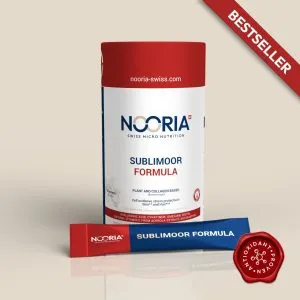
Sea buckthorn extract is part of Nooria’s https://shop.nooria-swiss.com/collections/shop-all/products/sublimoor/?region=usd, positioned as a beauty and antioxidant formula alongside collagen peptides, Cynatine, and ginseng — ingredients that target skin, hair, and nail structure from complementary directions. It reflects the same underlying logic this trial tested: that oral, fatty-acid-and-antioxidant-driven support can move the needle on skin quality, not just supply a single nutrient in isolation.
The Bottom Line
The authors themselves are appropriately measured — they note more research is needed to confirm the mechanisms behind these results. But for a 12-week, well-tolerated, oral intervention with objectively measured skin improvements alongside self-reported relief in two commonly under-discussed areas of women’s health, this trial is a genuinely notable data point for what a single nutrient-dense oil can do.
References
[1] Chan, L.-P.; Yen, T.-W.; Tseng, Y.-P.; Yuen, T.; Yuen, M.; Yuen, H.; Liang, C.-H. “The impact of oral sea-buckthorn oil on skin, blood markers, ocular, and vaginal health: A randomized control trial.” Journal of Functional Foods 2024, 112, 105973. https://doi.org/10.1016/j.jff.2023.105973 (open access, CC BY 4.0)
This content is for informational purposes only and is not intended as medical advice. Always consult a qualified healthcare professional before starting any new supplement, diet, or exercise program. These statements have not been evaluated by regulatory health authorities. Nooria products are not intended to diagnose, treat, cure, or prevent any disease.