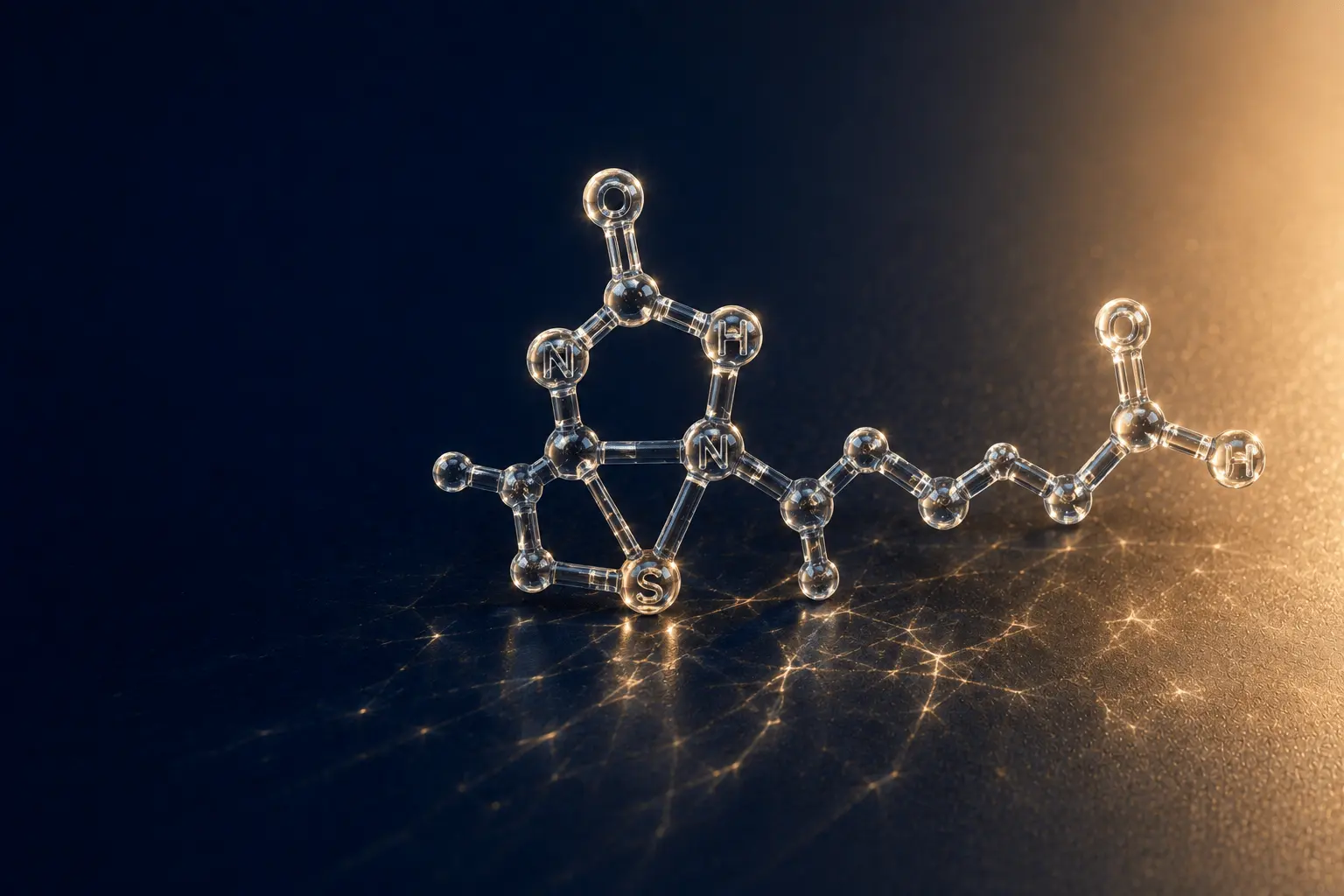
Iodine gets far less nutritional attention than most vitamins and minerals, despite being absolutely required to make thyroid hormones — and despite genuine, well-documented deficiency risk in specific modern populations. A 2024 narrative review in the British Journal of Nutrition, alongside an earlier Polish dietary-intake study, together paint a clear picture of who’s actually at risk and why.
Why Iodine Matters So Much
Iodine is essential for synthesizing the thyroid hormones triiodothyronine (T3) and tetraiodothyronine (T4), and inadequate intake leads to a spectrum of problems collectively called iodine deficiency disorders. While goitre (thyroid gland enlargement) is the most visible sign, cognitive impairment has the greatest population-level impact — thyroid hormones are essential for brain and neurological development, making iodine particularly critical during the first 1,000 days of life, when the brain is developing fastest. Even mild-to-moderate iodine deficiency during pregnancy has been linked to lower IQ and reading ability in school-aged children.
A Real Public Health Concern, Not a Historical One
Iodine deficiency has re-emerged as a public health concern in women of reproductive age in several European countries, including the UK and Ireland — regions previously considered iodine-replete for decades. The first UK nationwide survey in over 50 years, in 2011, found mild iodine deficiency in teenage schoolgirls, and subsequent regional studies across the UK and Ireland have repeatedly found mild deficiency in adolescent girls and women of childbearing age. In countries without a mandatory salt iodisation program — the UK and Ireland among them — iodine status depends heavily on individual food choices rather than a population-wide safety net.
Why Plant-Based Diets Carry Specific Risk
Plant foods have a naturally low iodine concentration, while animal sources — milk, fish, and eggs — currently provide the majority of iodine intake in many countries, including over 60% in Iceland, Norway, Spain, and the UK. Calculating iodine provision from a reference predominantly plant-based diet (the EAT-Lancet reference diet), researchers found it would provide just 85% of the recommended adult intake and only 51–64% of the pregnancy recommendation — and if cow’s milk is replaced with an unfortified plant-based alternative, provision drops to just 34% of the adult recommendation. Vegans specifically are considered at elevated risk of iodine deficiency without supplementation, since strict plant-based diets cannot reliably reach recommended intake from food alone.
A Word of Caution on Seaweed
Seaweed is often cited as a rich plant-based iodine source, but its content is highly variable and can be excessive — even a small 5 g portion of kelp can provide over 14 times the safe upper intake limit. Prolonged excess iodine intake from seaweed (particularly kombu) has been linked to both hyper- and hypothyroidism, so seaweed supplements specifically are not recommended as a reliable iodine source.
Older Adults Are a Second At-Risk Group
A separate dietary-intake study in Poland found that average daily iodine intake from food (excluding iodised salt) ranged from 40.4 to 50.7 µg across adults and children — well below recommended levels — while elderly people’s diets provided somewhat more, at 75.5 µg/day, still short of adequacy from food alone. The study’s conclusion was direct: iodisation of table salt is necessary to close this gap, since food sources alone are insufficient across all the diets studied.
The Bottom Line
Iodine deficiency is a genuine, re-emerging concern in specific populations that don’t always get flagged for it — women of childbearing age and pregnant women in countries without salt iodisation, people following predominantly plant-based or vegan diets (especially if replacing dairy with unfortified alternatives), and older adults with lower-than-assumed dietary iodine intake. The practical guidance from both reviews is consistent: prioritize iodine-fortified foods or reliable dietary sources, and where seaweed is involved, treat it as unpredictable rather than a dependable iodine source.
References
[1] Nicol, K.; Nugent, A.P.; Woodside, J.V.; Hart, K.H.; Bath, S.C. “Iodine and plant-based diets: a narrative review and calculation of iodine content.” Br. J. Nutr. 2024, 131, 265–275. https://doi.org/10.1017/S0007114523001873 (open access)
[2] Studies on iodine content in daily diets, particularly elderly people’s diets — Polish dietary intake survey.