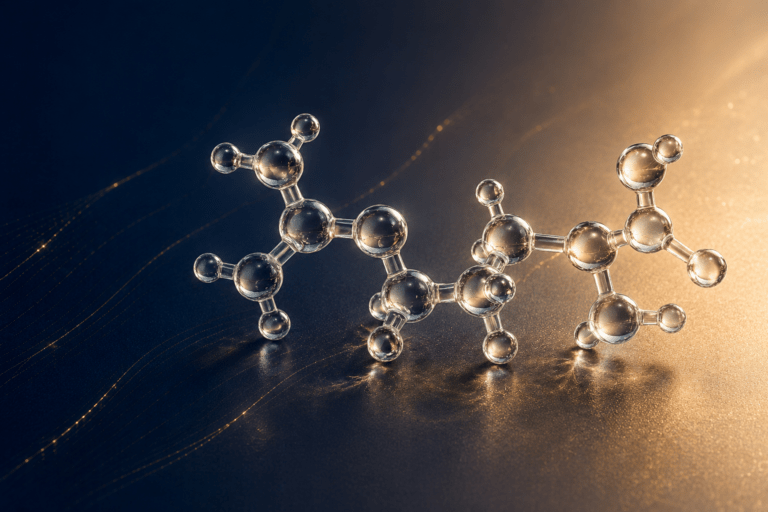
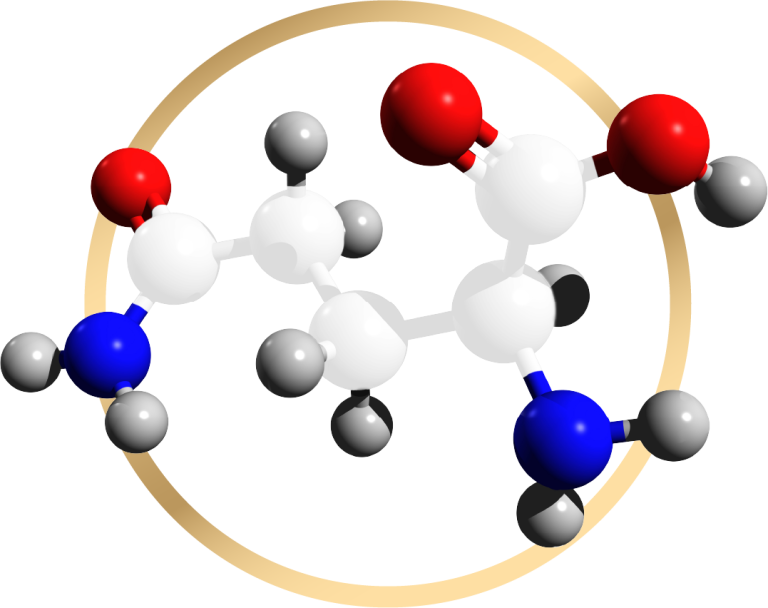
Glycine is the smallest amino acid in the human body, and technically classified as “non-essential” because the body can make its own supply — mainly by converting the amino acid serine in the liver, at a natural rate of roughly 2.3 to 3.1 grams per day in adult men. That classification undersells its research profile: several controlled trials suggest that under specific conditions — before bed, or during periods of higher physiological demand — supplemental glycine does something the body’s own production may not fully cover.
Why “Non-Essential” Doesn’t Mean “Enough”
Emerging research reframes glycine as “conditionally essential” — the body can make it, but production may fall short during pregnancy, aging, intense exercise, chronic stress, inflammation, or illness, when demand rises faster than the liver’s output. Some research suggests an intake of 10–15 g/day may be closer to ideal for these higher-demand periods, well above what the body produces on its own.
The Sleep Evidence
Glycine’s best-documented effect is on sleep quality, tested in randomized, placebo-controlled trials. In one study, 15 healthy participants aged 24–53 with chronic sleep dissatisfaction reported reduced next-day fatigue after taking 3 g of glycine within an hour of bedtime. A separate trial in people with continuously poor sleep quality found the same 3 g dose before bed reduced the time it took to fall asleep, improved sleep efficiency, and decreased daytime sleepiness compared to placebo. The proposed mechanism involves two pathways: glycine appears to lower core body temperature (a signal the body uses to initiate sleep) and modulates serotonin levels, which in turn affects melatonin production.
A Calming Effect on the Nervous System
Beyond sleep specifically, glycine acts as an inhibitory neurotransmitter in the central nervous system, helping regulate nerve signaling and reduce overstimulation. A trial in patients with adjustment disorder found four weeks of glycine supplementation reduced anxiety symptoms by 31%, compared to 15% in the placebo group — with the most significant improvements in anxious mood, sleep disturbances, and tension specifically. Glycine also acts on NMDA receptors to produce an excitatory effect in certain brain circuits, a mechanism linked to neuroplasticity, learning, and memory — a reminder that glycine’s role in the nervous system is regulatory rather than simply “calming everything down.”
Structural Roles: Collagen and Creatine
Glycine is a key building block of collagen — the protein that gives structure to skin, joints, and connective tissue — and collagen production naturally declines from the mid-twenties onward. A double-blind, placebo-controlled study found that 2.5–5 g/day of collagen peptides for eight weeks significantly improved skin elasticity compared to placebo, with the effect persisting for four weeks after supplementation stopped. Separately, glycine is one of three amino acids the body needs to synthesize creatine, which supports cellular energy production (ATP) in muscle and brain tissue — insufficient glycine intake may limit how much creatine the body can produce on its own.
Gut and Inflammatory Effects
Glycine has documented anti-inflammatory effects and helps maintain the integrity of the intestinal barrier, which may reduce the risk of increased intestinal permeability (“leaky gut”). Some research suggests a role in managing inflammatory bowel conditions like Crohn’s disease and ulcerative colitis by modulating immune responses in the gut, though this application is less established than the sleep and skin research.
The Bottom Line
Glycine’s sleep-quality effect is the most consistently replicated finding across controlled trials, at a fairly specific and modest dose — 3 g taken close to bedtime — with a plausible, well-described mechanism (lower core temperature, serotonin/melatonin modulation). Its roles in collagen and creatine synthesis are basic, well-established biochemistry, and the anxiety-reduction finding, while promising, comes from a smaller, more specific clinical population and warrants being read as an initial signal rather than a broad anxiety treatment claim.
References
[1] Bueckert, S. “Better Sleep and 7 Other Glycine Benefits.” Reviewed article, fact-checked, published Feb 28, 2024, updated Oct 24, 2024.
[2] Consumer health reference, “The amino acid glycine,” reviewed by S. Borko.