Few botanicals carry as long a track record as ginseng. It has been used in East Asian medicine for centuries as a tonic for fatigue, stress, and vitality, and it remains one of the most commercially significant herbs in North America, where Panax quinquefolius is grown commercially in Ontario, British Columbia, and Wisconsin. But a long history of traditional use is not the same as clinical proof — and a widely cited review in Public Health Nutrition set out to separate what the evidence actually supports from what remains theoretical.
What the Research Actually Shows
The review, from food science researchers at the University of British Columbia, works through decades of in vitro, animal, and human studies on ginseng’s adaptogenic and antioxidant properties. Ginseng’s active compounds — a family of roughly 30 triterpene saponins known as ginsenosides — have been linked to enhanced oxygen uptake and glucose utilization, changes in circulating stress hormones (ACTH and corticosterone), and support for immune cell function, including T-helper cell activity and immune response in older adults.
The Antioxidant Case Is the Strongest
Where the evidence is most consistent is oxidative stress. Ginseng extracts have repeatedly been shown to scavenge free radicals, protect DNA from hydroxyl-radical damage, and reduce lipid peroxidation across multiple laboratory models — including protecting LDL cholesterol from the kind of oxidative damage linked to cardiovascular disease. In stressed tissue specifically (such as during intense exercise), ginseng supplementation has been associated with increased activity of the body’s own antioxidant enzymes, glutathione peroxidase and superoxide dismutase.
The Energy and Performance Evidence Is More Mixed
Here the review is refreshingly candid: while some studies report increased oxygen uptake, enhanced glucose utilization in stressed tissue, and higher energy levels reported by athletes and older adults, several well-controlled trials found no measurable ergogenic (performance-enhancing) effect during intense physical exertion. The honest summary is that ginseng’s benefits show up more reliably in metabolic and antioxidant markers than in a stopwatch.
Safety: Generally Well-Tolerated, With Real Exceptions
At recommended doses, reported side effects are uncommon. The review does flag genuine interactions worth knowing about: ginseng has been reported to interact with warfarin (affecting blood clotting) and with phenelzine (a monoamine oxidase inhibitor), and very high, unsupervised intakes have occasionally been linked to insomnia, hypertension, and gastrointestinal upset. As with most adaptogenic herbs, more is not better — the benefit profile is built around consistent, moderate dosing rather than megadosing.
Where Ginseng Fits Into a Nooria Routine
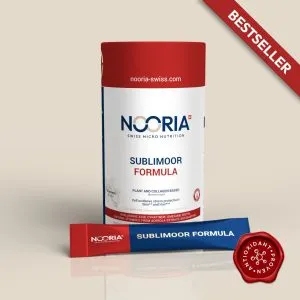
Ginseng is one of the active botanicals in Nooria’s https://shop.nooria-swiss.com/collections/shop-all/products/sublimoor/?region=usd, where it’s included specifically to support physical and mental performance during fatigue and to help maintain immune function and vitality — the two areas where the underlying research base is most consistent.
The Bottom Line
Ginseng’s centuries of traditional use are backed by real, if uneven, modern evidence: strong support for its antioxidant and immune-supporting properties, weaker and more mixed evidence for direct athletic performance gains. That nuance — rather than a blanket “energy herb” claim — is what the science actually supports.
References
[1] Kitts, D.D.; Hu, C. “Efficacy and Safety of Ginseng.” Public Health Nutrition 2000, 3(4A), 473–485. https://doi.org/10.1017/S1368980000000550
This content is for informational purposes only and is not intended as medical advice. Always consult a qualified healthcare professional before starting any new supplement, diet, or exercise program. These statements have not been evaluated by regulatory health authorities. Nooria products are not intended to diagnose, treat, cure, or prevent any disease.