Muscle mass and strength don’t decline evenly with age — they tend to fall off a cliff after 65 unless something actively counteracts it. The medical term for this age-related loss of muscle mass and function is sarcopenia, and it’s a major driver of frailty, falls, and lost independence in older adults. Resistance training is the most effective known intervention, but a growing body of research suggests that what you eat around your training matters just as much as the training itself — and collagen peptides have emerged as an unexpectedly effective addition.
What the Research Actually Tested
A randomized, double-blind, placebo-controlled trial published in the British Journal of Nutrition followed 53 elderly men (average age 72) with diagnosed sarcopenia through a 12-week guided resistance training programme, three sessions per week. Half the group received 15g of collagen peptides daily after each training session; the other half received a silica placebo, dissolved the same way so neither group knew which they were taking.
Both Groups Improved — But Not Equally
Resistance training worked for everyone: both groups gained significant fat-free mass, lost fat mass, and improved muscle strength and sensory motor control over the 12 weeks. But the collagen group’s results were consistently larger. Fat-free mass increased by 4.2kg in the collagen group versus 2.9kg with placebo. Fat mass dropped by 5.4kg versus 3.5kg. And muscle strength — measured as isokinetic quadriceps power — improved by 16.5 Nm in the collagen group compared with 7.3 Nm on placebo, a statistically significant difference.
Why Collagen, Specifically?
Collagen has a reputation as a “lower quality” protein for muscle building, since it’s relatively low in the branched-chain amino acids typically associated with triggering muscle protein synthesis. The researchers behind this study point to a different mechanism: collagen peptides are unusually rich in glycine and arginine, both of which are substrates the body uses to synthesize creatine — a compound with its own well-documented role in muscle performance and recovery. That, combined with collagen’s role in supporting the connective tissue and joints that make hard training sustainable in the first place, may explain why the effect showed up so clearly in an older, previously under-trained population.
Beyond Muscle: Joint Comfort and Recovery
Separate research cited in the study also points to collagen peptides reducing joint pain and improving functional comfort in people with osteoarthritis — relevant for older adults for whom joint discomfort is often the limiting factor in how much resistance training they can actually do.
Where Collagen Peptides Fit Into a Nooria Routine
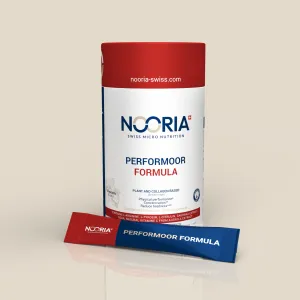
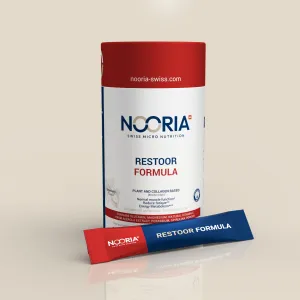
Collagen peptides are a core ingredient in Nooria’s Performoor Formula, formulated to support lean muscle development, post-exercise recovery, and joint integrity during physical training — directly reflecting the mechanism this trial investigated. The same ingredient also appears in Restoor Formula, where it is paired to support muscle recovery and connective tissue health after physical stress.
The Bottom Line
Resistance training remains the single most important thing an older adult can do to preserve muscle and independence. But this trial is a clear demonstration that what surrounds the training — in this case, a simple daily collagen peptide supplement taken after each session — can measurably amplify the results, particularly in the population that benefits most: older adults working to hold onto their strength.
References
[1] Zdzieblik, D.; Oesser, S.; Baumstark, M.W.; Gollhofer, A.; König, D. “Collagen peptide supplementation in combination with resistance training improves body composition and increases muscle strength in elderly sarcopenic men: a randomised controlled trial.” British Journal of Nutrition 2015, 114, 1237–1245. https://doi.org/10.1017/S0007114515002810 (open access, CC BY 3.0)
This content is for informational purposes only and is not intended as medical advice. Always consult a qualified healthcare professional before starting any new supplement, diet, or exercise program. These statements have not been evaluated by regulatory health authorities. Nooria products are not intended to diagnose, treat, cure, or prevent any disease.